
This is the section we both really wanted to write, but also really hated.
Dog fights are terrifying, for everyone. Both of us have witnessed a few, which ranged from very dramatic but ultimately harmless, to potentially fatal, and it never gets any less horrific.
There’s a lot of things to consider when we’re faced with a brewing dog fight: how to stop it escalating, how to break it up, how to assess its severity, how to know if anyone involved needs medical treatment, the legalities involved, and how to emotionally recover afterwards.
It’s a lot to talk about, but this section is going to deal with the immediate actions required to break up a fight once it’s already in progress. The rest is a story for another day.
Make sure to watch the video and also read the rest of the lesson down below:
Tools for breaking up fights
There are a few tools we’ll need to have on us if we want to break up a dog fight safely. It’s a good idea to put together a dog fight kit for your home if you live with multiple dogs, and to take a few of the items with you when you go for walks or off-leash adventures. We’ve both got quite a few stories of off-leash dogs running up to our on-leash dogs during neighbourhood walks, so even under the most everyday circumstances, it’s a good idea to have these tools available just in case.
Noise Makers
These may startle the dogs enough to pause the fight so we can separate them. Air horns work really well. We can also DIY these, by putting rocks or coins in a can and rattling this close to the ears of the fighting dogs. Anything you can think of that can make a really loud noise will work.
Blanket and/or Board
Blankets and boards help create a physical and visual barrier between the dogs.
Children’s boogie boards work great, because they’re lightweight so we can move them into position quickly. We’re going to be looking for a quick break in between the fighters, at which point we’ll get our board in between them and physically block them from each other. This should provide enough time for the owners of the dogs or anyone else on the scene who’s willing to help, to either pull the dogs away by their leashes, or to get them in control position and hold them back.
A blanket is another option, and to use this we’ll need to throw it over the dogs when they’re fighting. This will momentarily block their vision and disorient them enough that, again, the owners or bystanders should be able to come in and grab them.
If we don’t have any of these on-hand, we can use anything else in the environment that we can put between the dogs. Chairs, branches, various furniture pieces – anything.
Squirt Bottles and Citronella Sprays
If you know anything about 3 Lost Dogs, you’ll know that the last thing we ever want to do is advocate causing a dog pain or discomfort. We think that on top of it being an unethical way to teach people to train, it’s also a lazy way.
But we’re no longer in the realms of training, here. In many cases, dog fights are literally life or death for the dogs involved. And, in such extreme cases, we gotta do what we gotta do to save them from each other.
A squirt bottle full of water can work as an interrupter and as an unpleasant discourager if the fight is relatively minor and there’s a big enough break that we can use the squirt bottle in the dogs’ faces to force them to get some distance from each other, at least for long enough that we can have someone grab them and forcibly remove them.
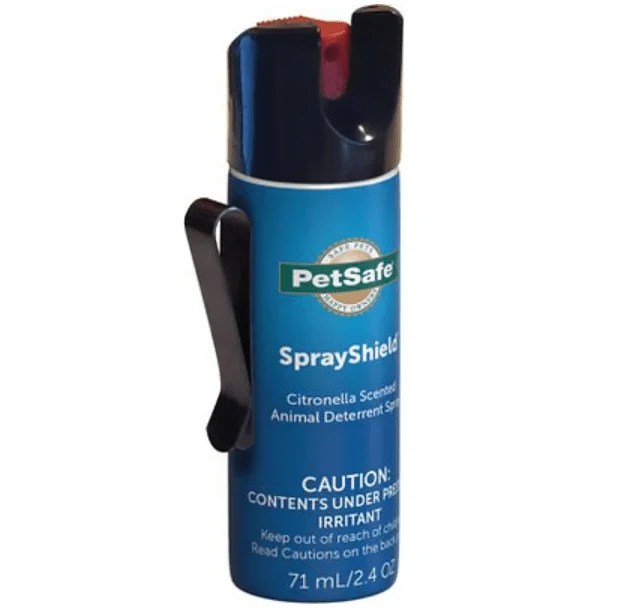
A citronella spray, like SprayShield from Petsafe, is a slightly more aggressive option for fights that are more serious. The spray needs to be directly at the dog’s nose, and fairly close range. This will be enough of an unpleasant sensation that it should shock the dog enough that they back off for a second, again, so that we can have someone grab them.
Break Stick

This tool is specifically for the bite-and-hold bite style mentioned in the video. It’s basically a wedge-shaped piece of wood or strong plastic, that we insert in the gap between the front and back sets of teeth, and twist backwards – like we’re revving a motorcycle. This movement jacks the dog’s jaw open enough that they release the other dog, and we can pull them apart safely.
To use the break stick, we need to get the dog in control position, which we’ll discuss in the next section.
Maneuvers:
There are two main maneuvers to help break up a dog fight, and they relate to the two different bite styles.
The Wheelbarrow
Did you ever play that hilarious wheelbarrow race game at school, where your partner has to hold your legs while you walk on your hands and you have to race like that to the finish line?
Well, now we get to use those same concepts to break up a violent conflict. Yay!
In bite-and-release bite style fights, after we’ve employed some of our other tools to help interrupt the fight and it’s time to pull the dogs away, the wheelbarrow method is the best way to do that. It involves standing directly behind the dog and grabbing them underneath the hips (but be careful not to be grabbing at their genitalia or pinching them under the legs, they won’t like that), lifting their back legs off the ground, and moving backwards and around in a circle.
This move does a few things:
- It makes the dogs less likely to be able to escape and go for each other again. Their centre of gravity is off, and they don’t have enough power in just their front legs to get back to each other.
- In order to get a hold of each other again, they need their front feet, but in this position those feet are preoccupied keeping them upright.
- It’s a safer position for us, because we’re as far away from those teeth as possible, and it’s a very difficult position for them to bite us from. They would have to get past their own butt. We can move ourselves out of the way and block their bite attempts with their own bodies.
- The circle part of the “move backwards and around in a circle” means that not only are they only balancing on two feet, but now they have sideways motion to contend with, which is a lot harder when you have no ability to balance yourself. If we just move backwards, we’re putting all our effort into pulling directly opposite to the direction that they’re pulling in, and if we want to win then that’s just bad physics. Going back and around gets us the distance we need with less risk that they’ll win the tug of war.
The Control Position
This position is for use in bite-and-hold style fights, on whichever dog/s are clamping down.
What we want to do is grab the dog’s collar or scruff firmly and position our legs on opposite sides of their hips. It should look a bit like you’re a rodeo cowboy. In this position we can insert the break stick, or employ one of the other techniques we’re about to talk about. Once the bite is released, this position ensures that we can stay the heck out of the way of those teeth, by controlling the head movements and the body position of the dog with our hands and our thighs respectively.
There are a couple of extra moves we should talk about, that are particularly for use in bite-and-hold fights. These should be conducted in control position:
The Choke Out
This sounds awful because it is, but if it gets your dog to release a potentially very serious bite, we have to do it.
This involves constricting your dog’s airways by pulling on or twisting their collar. When their airway is that constricted, breathing through just their nose or a clenched jaw won’t cut it, and they’ll eventually have to open their mouth to take a breath.
If they’re not wearing a collar it is NOT advised to perform this move with your hands around their throat. If they redirect their aggression when they do release, you might just lose a hand.
Pushing into the Bite
This feels counter-intuitive, but if you push your dog’s head into the bite – so, towards the dog they’re biting – the pressure this puts on their jaw may encourage them to release enough that you can pull them back.
To do this, grab a good tight hold of their scruff (not just their collar) and use a bit of your body weight to shove their head forward.
If you have no tools available, and none of these moves are either an option or working for you, staying in control position and waiting the dog out is also an option. Ideally, we’d like to get the fight over with as quickly as possible, but if we have our dog in control position, then there’s not too many ways for the fight to get worse without them having to release their bite first. They’ll have to ease up eventually, and that’s when we can separate them.
If, while you’re waiting it out, your dog starts to shake, do your best to control their head movements and minimise this with your hands on their scruff. This is a good time to try pushing them into the bite.